
There is no single best automatic pet feeder, and any list that hands you one winner for every household is quietly hoping you will not notice how different your situation is from your neighbour’s. A feeder that suits a solo indoor cat on a vet-portioned diet is close to useless in a home with two dogs and a blackout-prone power supply.
So we have done this the other way around. Below are ten household types we hear about constantly, what each one actually needs from an auto feeder, and where our own two units fit. Find yours, read that section, skip the rest. If your situation lands on number ten, we will tell you not to buy anything at all.
How We Sorted These Ten
We grouped by household rather than by brand because the deciding factors are almost always domestic. How many animals share the room at dinner. Whether the food is wet or dry. How predictable your evenings are. Whether anyone is home to hear a jam.
Price matters too, but it tends to matter less than people expect. The gap between our two models is $35, and that gap buys remote monitoring rather than better feeding. Plenty of households genuinely do not need it.
The 10 Households and What Each One Needs
1. The Single Indoor Cat on a Portion Controlled Diet
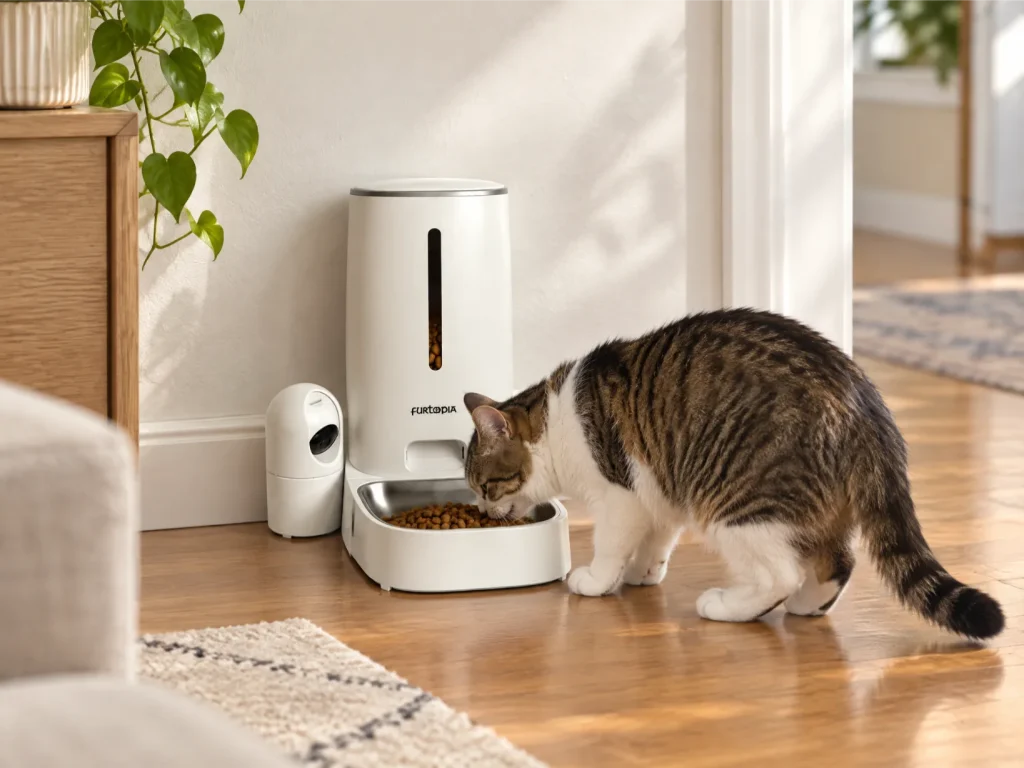
For one cat on a measured daily quantity, a programmable timer automatic cat feeder is the whole answer, and a camera adds nothing. Your vet has given you a number. The job is hitting that number identically every day, which a scoop and a tired human at 6 am will not do.
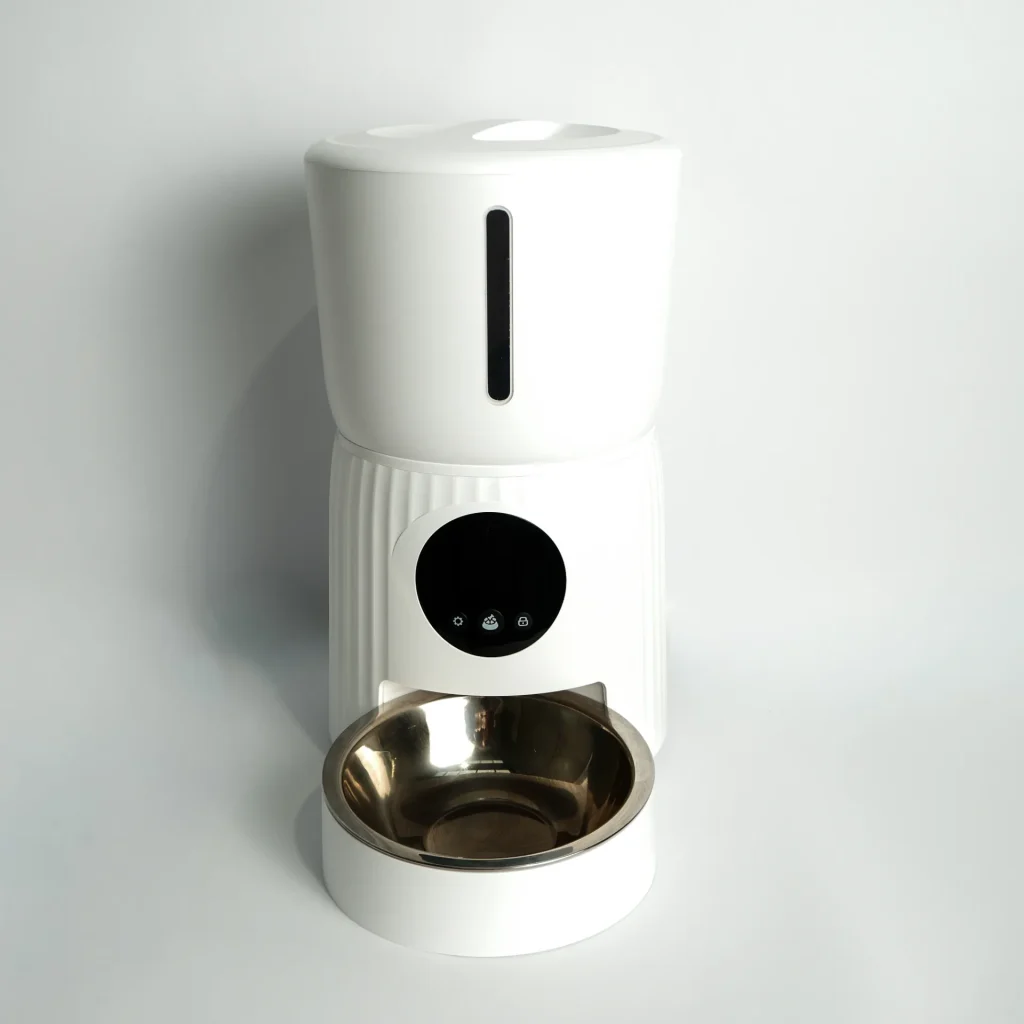
Look for a unit that dispenses in small increments so you can split the daily allowance across three or four servings instead of two large ones. Grazing suits feline digestion better than gorging, and spreading the same quantity across more meals often settles a cat who has been waking you at dawn. Our Automatic Pet Feeder without Camera covers this at $89.95, and honestly, spending more here would be spending it on features you will not open.
2. The Two Cat Home Where One Steals From the Other
If one animal muscles into the other’s serving, a standard cat food feeder makes the problem worse rather than better, because it dispenses food on a predictable schedule that the bolder cat learns within days. This is the situation where we most often tell people that a single unit will not solve it.
Two feeders in separate rooms, on staggered times, works for most households. Microchip-gated units that only open for a registered animal are the other route, though they run considerably more expensive and some cats never fully accept the flap. Whichever you pick, watch the first week closely. Cats are inventive about food in ways that specification sheets do not anticipate.
3. The Dog Who Eats Far Too Fast
A feeder controls when and how much, never how quickly, so a gulper needs a slow feeder bowl rather than automation. We see this misunderstanding a lot, and the disappointment that follows is entirely avoidable.
Our slow feeder bowl uses raised ridges that force a dog to work around obstacles, which stretches a thirty-second inhalation into several minutes and reduces the bloat and vomiting that come with speed eating. Pair it with a feeder if you also need scheduling, but treat them as two separate problems with two separate solutions.
4. The Household That Travels Most Weekends
Frequent travellers should treat battery backup as non-negotiable and a pet camera as close to it. When you are four hours away, the difference between a feeder that kept running through a brief outage and one that lost its schedule is the difference between a calm Sunday and a very long drive home.
Our Automatic Pet Feeder with Camera sits at $124.95 and lets you confirm the portion landed and your cat came to eat it. That second part is what cat owners underestimate. A feeder tells you food was released, not that anybody consumed it. We have written a full weekend feeding checklist covering the rest of the setup, because food is only one of five things that need sorting before you go.
5. The Wet Food Household
Wet food needs a sealed, chilled or ice pack compartment, and even the units built for it hold a safe window measured in hours rather than days. Standard hopper feeders are dry food only, and putting wet food through one is a genuine health risk rather than a warranty concern.
If your pet eats exclusively wet, your options narrow considerably and cost more. Many owners land on a hybrid instead: wet meals served by hand when someone is home, dry portions handled the rest of the time automatically. It is less elegant than a single device doing everything, but it works, and it costs a fraction of a specialist cooled unit.
6. The Shift Worker With an Unpredictable Roster
Irregular hours are the strongest single argument for automating feeding, because the pet’s routine stops depending on yours. A cat fed at 6 pm when you are on early shift and 11 pm when you are on late learns nothing except that food is unpredictable, which is where the yowling and counter surfing start.
Set the schedule to what suits the animal, not what suits your calendar, then leave it alone. Consistency is the point. If your roster changes month to month, an app-connected model lets you adjust without being physically present, which is worth the upgrade in a way it is not for a nine-to-five household.
7. The Owner Who Simply Wants to See
Some people buy the camera feeders for reassurance rather than function, and that is a legitimate reason to spend the extra $35. We are not going to pretend otherwise or dress it up as a feeding benefit.
Watching your cat trot over at 6 pm from a hotel room does not improve the meal. It improves your evening. For owners who have been anxious about leaving a pet, particularly a newly adopted one, that peace of mind earns the money on its own terms. Just be clear with yourself about what you are buying, because the feeding performance of both our units is identical.
8. The Rural or Blackout Prone Home
Where power is unreliable, battery backup shifts from a nice specification line to the feature the entire purchase rests on. A unit without it loses the schedule as well as the power, which means meals stop until somebody physically resets it.
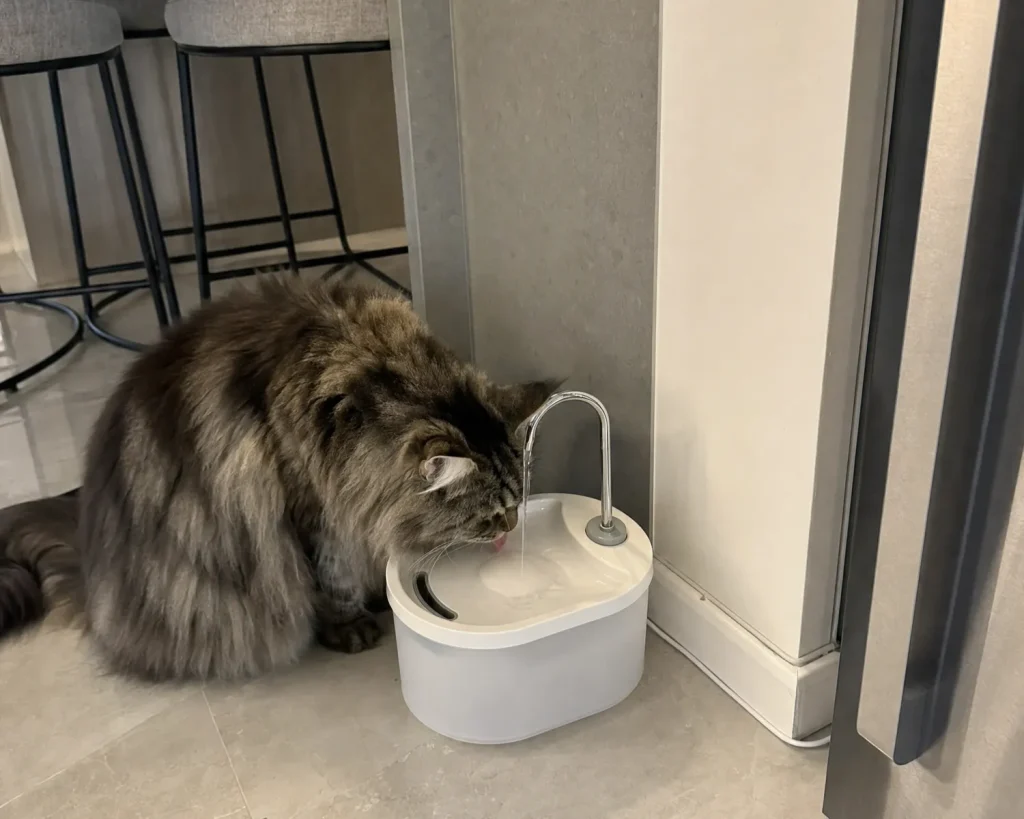
Check how long the backup runs and whether it keeps the programmed times or only the clock. Keep spare batteries in the same cupboard as the pet food so the swap is obvious. If your area drops out regularly, we would also suggest a water solution that does not depend on mains power, since a wireless fountain keeps circulating when the pump-powered alternatives stop.
9. The First Time Buyer Testing the Idea
Start with a programmable unit and no app, because the most common regret we hear is not underspending; it is buying features that never got used. The scheduling and portioning are what change your daily routine. Everything above that layer is refinement.
Give it a fortnight before you judge it. There is usually an adjustment period where the pet approaches the new object suspiciously, and you second-guess the whole purchase. If you find yourself genuinely wanting to check in remotely after a month of ownership, upgrading later costs less than buying the wrong thing twice. Our feeders without camera are where most first-time buyers sensibly begin.
10. The Puppy, Kitten, Senior, or Medicated Pet
Do not buy an automatic feeder for these animals yet, and we would rather lose the sale than have you find that out afterwards. Young pets are still forming eating habits and generally do better with a person present while those settle. Senior animals and any pet on medication need someone reading the small daily signals that a machine cannot register.
The relevant signal is often what did not happen. A cat who leaves half a bowl, a dog who is slower to come when called. A feeder dispenses regardless and logs a successful meal either way. Once the animal is stable and the routine is established, revisit the idea. Until then, the answer is a person.
Comparing Our Two Pet Feeders Directly
Both dispensers share the same mechanism, hopper capacity, and battery backup. The built-in camera is the only meaningful difference, which makes this a shorter comparison than most.
| Automatic Pet Feeder without Camera | Automatic Pet Feeder with Camera | |
|---|---|---|
| Price | $89.95 | $124.95 |
| Scheduled dispensing | Yes | Yes |
| Portion control | Yes | Yes |
| Battery backup | Yes | Yes |
| Live video | No | Yes |
| Remote manual feed | No | Yes, via app |
| Best suited to | Predictable households, first-time buyers, budget-conscious owners | Frequent travellers, anxious owners, irregular schedules |
If you are undecided, ask yourself one question. Over the past month, how many times would you have opened the app? If the honest answer is under five, save the money.
What Pet Owners Should Check Before You Buy Any Automatic Pet Feeder
These apply regardless of which household you landed in above.
- Confirm the hopper capacity against your pet’s actual daily intake rather than the marketing figure, because a stated seven-day capacity usually assumes a small cat on modest portions and shrinks considerably for a large dog.
- Check that the stainless steel bowl and hopper separate for washing without tools, since a feeder that is awkward to clean gets cleaned less often, and stale kibble residue is how jams and odours begin.
- Verify the kibble size range the mechanism handles, as very large or irregularly shaped pieces are the most common cause of a chute blockage.
- Test a full dispense cycle at home before you rely on it, ideally several days ahead of any trip, so a fault surfaces while you are standing in the kitchen rather than sitting on a plane.
Frequently Asked Questions
What is the best automatic pet feeder in Australia?
The best feeder is whichever matches your household type from the ten above, since the feeding mechanism is broadly similar across reputable units at this price level. For most Australian homes with one or two pets on dry food, a programmable feeder with battery backup in the $80 to $130 range covers everything needed.
Is a camera worth the extra money?
It depends entirely on whether you will use it. The camera does not improve feeding accuracy, portion control, or reliability, all of which are identical between our two models. It buys reassurance for people who travel or worry, which is a real benefit but a personal one.
Can one feeder serve two pets?
Not reliably, if they eat in the same room. The faster or bolder animal will learn the schedule and take both portions within a week. Separate feeders in separate spaces, or microchip-gated units, are the workable answers.
How long does a full hopper last?
For a single cat on standard portions, most units hold roughly a week of dry food. A medium dog will empty the same hopper in two to three days. Measure your pet’s daily quantity and divide, rather than trusting the number on the box.
Do automatic feeders work with wet food?
Only specialist models with sealed, chilled compartments, and only for a matter of hours. Standard hopper feeders, including ours, are built for dry food. Using wet food in one risks spoilage and a mechanism that will not clean properly afterwards.
What happens during a power cut?
Units with battery backup continue running their saved schedule, which is why we treat that feature as essential. Models without it may lose both power and the programmed feeding times, stopping meals until someone resets the device manually.
Choosing the Best Automatic Pet Feeder
Work out which of the ten households is yours, then buy for that rather than for the specification list. Almost everyone we speak to who regrets a feeder purchase bought for a situation they imagined rather than the one they live in.
If you want the mechanics behind all of this, our guide to how automatic pet feeders work covers the different types and their limits in detail. Otherwise, browse the full feeder range and pick the one your household actually needs.