
Puzzle toys are one of the best ways to keep your dog entertained, mentally stimulated, and engaged throughout the day. While daily walks and physical exercise are important, dogs also need opportunities to use their brains. The right puzzle toy can help reduce boredom, prevent destructive behaviour, and provide a fun challenge for your pet.
However, not all puzzle toys are created equal. Choosing a toy that is too easy may not hold your dog’s interest, while a toy that is too difficult can lead to frustration. Understanding your dog’s skill level is the key to finding the perfect puzzle toy.
Why Puzzle Toys Are Important
Dogs are naturally curious animals. In the wild, they would spend much of their day searching for food, solving problems, and exploring their environment. Modern pets often have food readily available and fewer opportunities to use these natural instincts.
Puzzle toys recreate some of these challenges by encouraging dogs to think, sniff, paw, slide, and manipulate objects to earn rewards. Benefits of dog puzzle toys include:
- Mental stimulation
- Reduced boredom
- Slower eating habits
- Increased confidence
- Reduced anxiety
- Less destructive behaviour
By keeping your dog mentally engaged, puzzle toys can become an important part of their daily routine.
Understanding Puzzle Toy Difficulty Levels
Most puzzle toys can be grouped into beginner, intermediate, and advanced categories.
Beginner Puzzle Toys
Beginner toys are designed for dogs that are new to problem-solving activities. These toys typically involve simple actions such as nudging, licking, or rolling the toy to release treats.
Examples include:
- Treat-dispensing balls
- Stuffable rubber toys
- Slow-feeder bowls
- Basic snuffle mats
These toys help dogs learn that interacting with the toy leads to a reward.
Intermediate Puzzle Toys
Once your dog understands the concept of working for treats, they may be ready for more challenging puzzles.
Intermediate toys often require dogs to:
- Slide compartments
- Lift lids
- Open flaps
- Move pieces in sequence
These toys encourage more problem-solving and help build confidence.
Advanced Puzzle Toys
Advanced puzzle toys are suitable for experienced dogs who have mastered simpler challenges.
These toys may require multiple steps to access rewards and often test memory, persistence, and problem-solving skills.
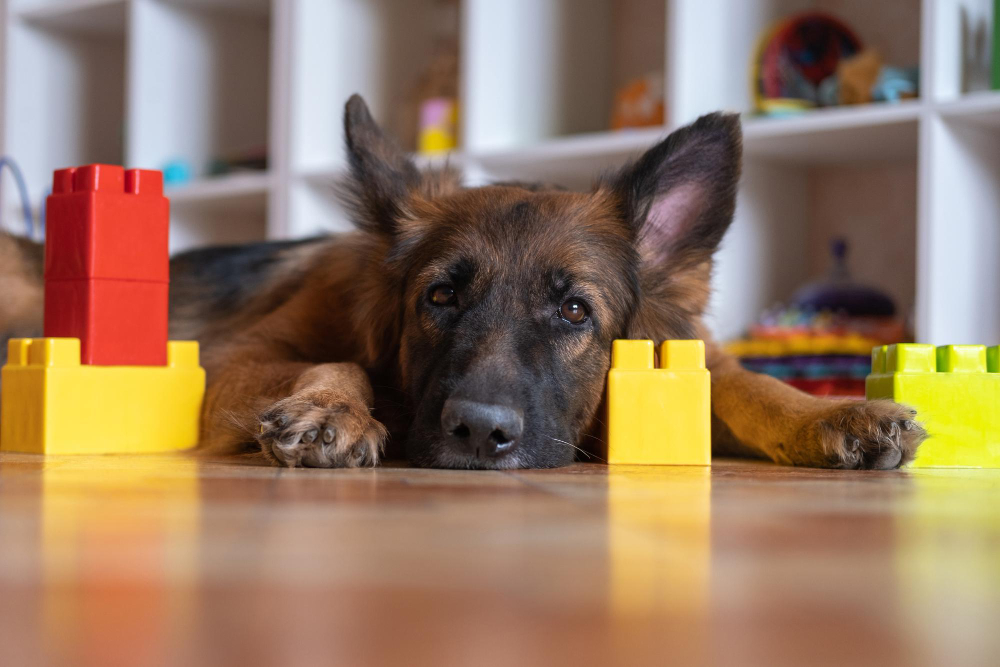
Advanced puzzle toys are ideal for highly intelligent breeds such as Border Collies, Australian Shepherds, Poodles, and German Shepherds.
Consider Your Dog’s Personality
Every dog learns differently. Some dogs become excited by challenges, while others may become frustrated if the puzzle is too difficult.
Observe how your dog reacts when using new toys:
- Confident dogs may enjoy more complex puzzles.
- Nervous dogs often benefit from easier toys.
- Food-motivated dogs usually learn quickly.
- Easily frustrated dogs should progress gradually.
Choosing a toy that matches your dog’s personality can make the experience more enjoyable.
Match the Toy to Your Dog’s Age
Age can also influence which puzzle toy works best.
Puppies
Puppies are still learning how to interact with toys. Soft beginner puzzles and treat-dispensing toys are usually the best option.
Adult Dogs
Healthy adult dogs can benefit from a wide range of puzzle toys. Their experience and energy levels often allow them to tackle more challenging activities.
Senior Dogs
Older dogs still need mental stimulation but may have reduced mobility or dental issues. Softer puzzles and scent-based enrichment toys are often ideal.
Signs It’s Time to Increase Difficulty
Your dog may be ready for a more advanced puzzle if they:
- Solve puzzles quickly
- Lose interest in current toys
- Finish challenges in under a minute
- Show excitement for new problems
Gradually increasing difficulty helps keep your dog engaged and prevents boredom.
Rotate Puzzle Toys Regularly
One of the simplest ways to keep puzzle toys interesting is by rotating them. Instead of leaving all toys available at once, offer different puzzles throughout the week.
This keeps the challenge fresh and encourages continued engagement.
Safety Tips for Puzzle Toys
Always supervise your dog when introducing a new puzzle toy. Check toys regularly for damage and replace any broken components.
Choose toys that are:
- Appropriate for your dog’s size
- Made from durable materials
- Easy to clean
- Free from small removable parts
Safety should always come first when selecting enrichment toys.
Final Thoughts
Choosing the right dog puzzle toy comes down to understanding your dog’s experience, personality, and skill level. Starting with simple puzzles and gradually increasing the challenge allows your dog to build confidence while staying mentally stimulated.
With the right puzzle toy, your dog can enjoy hours of enrichment, helping them stay happier, healthier, and less likely to become bored. Whether you have a curious puppy or a highly intelligent adult dog, there is a puzzle toy perfectly suited to their needs.