
We get asked this question constantly, usually by someone standing in a pet store aisle trying to decide if a fountain is worth the extra cost over a plain bowl. It’s a fair thing to wonder about, especially once you start reading about mould, wonder what it does to your power bill, or notice your cat has never once shown interest in its water dish.
In this guide, we walk through how pet fountains work, what vets tend to say about them, and the upkeep involved in running one safely. Our aim isn’t to talk you into buying one. It’s to give you enough to decide for yourself.
Short Answer: Are Pet Water Fountains Safe?
Pet water fountains are safe for most cats and dogs when they’re built from food-grade materials, positioned so cords stay out of reach, and cleaned on a predictable schedule. The fountain itself isn’t the risk. A fountain left dirty for weeks is. Safety comes down to three things: the material, how the cord is managed, and how consistently the unit gets cleaned.
- Fountains made from stainless steel, ceramic, or certified BPA-free plastic won’t leach chemicals into drinking water over time, which is the main material concern owners raise.
- Weekly cleaning paired with monthly filter changes keeps bacteria and mould from building up in the reservoir and tubing, since those extra parts create more surface area than a plain bowl.
- Running the cord along a wall or behind furniture keeps chewers away from it, which removes most of the electrical risk people worry about.
- Pets with existing kidney or urinary conditions can typically still use a fountain, though we’d suggest checking with your vet first if your pet is on a restricted fluid plan.
How Do Pet Water Fountains Work?
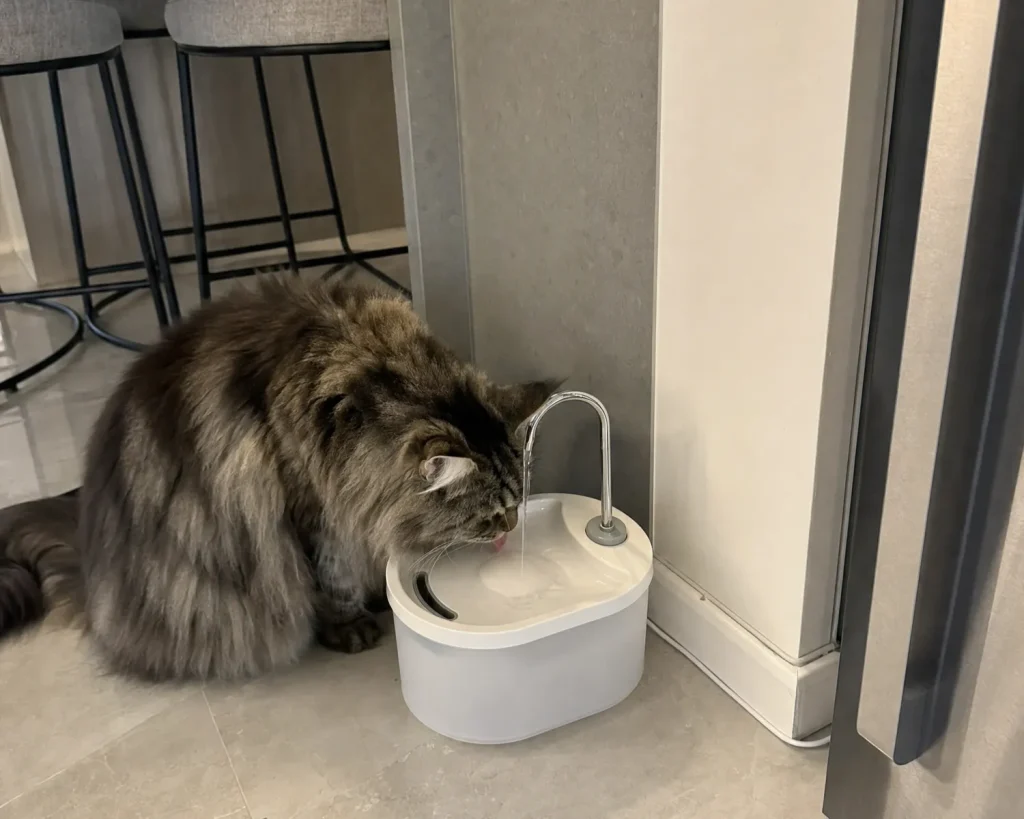
A pet water fountain works by using a small, low-voltage pump to pull water from a reservoir, push it through a filter, and release it back out over a spout or bowl edge. That circulation is the whole point. Cats in particular are drawn to moving water because it reads as fresher, a trait tied to their instincts around still water sources in the wild.
The Basic Mechanism
The reservoir holds the main supply, usually enough for a day or more depending on size. A submersible or external pump circulates that water continuously while plugged in, passing it through a filter that catches loose hair, food debris, and some odour. Because the water keeps moving instead of sitting still, it stays fresher between refills.
Types of Pet Water Fountains
Material matters more than most first-time buyers expect. Here’s how the main types compare.
| Type | How It Works | Best Suited For |
|---|---|---|
| Plastic Pump | Entry level Lightweight, affordable, filters widely available | First-time buyers testing if their pet likes moving water |
| Stainless Steel | Most hygienic Resists bacteria buildup better than plastic, no plastic taste | Multi-pet households or pets who chew |
| Ceramic | Most stable Heavy and stable, often dishwasher safe | Owners who want a durable, low-fuss option |
| Battery / Cordless | Cord free Runs without a mains cord | Homes without a nearby outlet, or travel |
Are Pet Water Fountains Worth It?
For most cats and plenty of dogs, a water fountain is worth it, particularly if your pet already avoids drinking from a still bowl and you notice that your pet is not drinking enough water. The value comes down to whether your pet actually drinks more because of it, not just how it looks on the counter.
In favour:
- Cats are instinctively drawn to moving water, and many owners see a genuine jump in how often their cat visits the bowl once a fountain replaces it.
- The built-in filter catches hair and debris that would otherwise sit in a plain bowl, keeping the water fresher between changes.
- A larger reservoir means fewer refills across the week, useful if you’re often out or managing several pets at once.
Against:
- The upfront cost is higher than a bowl, and replacement filters add to that over time.
- Cleaning takes more effort, since you’re dealing with a pump and tubing rather than one simple surface.
- Pump noise can put some pets off at first, and a small number never fully adjust.
Do Vets Recommend Water Fountains?
Many vets support water fountains as a way to encourage water intake, particularly for cats prone to urinary or kidney issues, but they’re rarely presented as something every pet needs. Pets that drink more tend to produce more diluted urine, which can lower the risk of certain urinary problems over time.
A fountain is a tool, not a treatment, so it shouldn’t replace regular veterinary care or a prescribed diet plan. Pets managing existing kidney disease should have their water setup discussed directly with their vet before anything changes. Consistency also tends to matter more than the product itself. A clean bowl your pet actually drinks from can do just as much good as a fountain your pet ignores.
We’d treat this section as a starting point rather than medical advice. If your pet has an existing condition, your vet is the right person to weigh in.
Are Pet Water Fountains Safe for Cats and Dogs? Common Concerns Answered
Pet water fountains are safe for the large majority of households once four specific areas are addressed: electrical setup, material quality, bacteria risk, and physical hazards. Each is manageable with a bit of awareness.
Electrical Safety
Fountain pumps run on low-voltage power, not mains-level current in the water itself, so the risk is smaller than people often assume. Route the cord along a wall or behind furniture so it stays out of reach for chewers, and unplug the unit before taking it apart to clean.
Material Safety
Look for “food grade” and “BPA free” on any plastic component before buying. Stainless steel and ceramic sidestep this concern entirely, since neither leaches chemicals the way lower-grade plastics can over time. It’s also worth avoiding units with visible scratches in the reservoir, since bacteria tend to collect in those grooves.
Bacteria and Mould Risk
This is the real concern behind most of the questions people search, not the mechanism itself. Standing water in a poorly maintained fountain can grow biofilm faster than a plain bowl, simply because there are more surfaces involved, including the pump housing and tubing. This risk is almost entirely solved by sticking to the cleaning schedule below.
Choking and Injury Risk
Physical injury from a fountain is rare, but check that filters and small parts are secured when you first set one up. Keep an eye on puppies or kittens during their first few days around a new fountain until you’re confident they know how to use it.
How Often Should You Clean a Pet Water Fountain?
Most fountains need a light clean weekly and a full filter change every two to four weeks, though the exact frequency depends on how many pets you have and how hard your tap water is. Households with several pets or hard water should lean toward the shorter end of that range.
| Task | Suggested Frequency |
|---|---|
| Top up water level | Every one to two days |
| Rinse and wipe the reservoir | Weekly |
| Replace the filter | Every two to four weeks |
| Deep clean the pump and tubing | Monthly |
| Full descale, for hard water areas | Every six to eight weeks |
How to Clean a Pet Fountain: Step by Step
Cleaning a pet water fountain takes about ten minutes and doesn’t call for special tools beyond a soft brush and mild dish soap. We’d suggest building it into a weekly habit alongside another regular chore so it doesn’t slip your mind.
Start by unplugging the fountain before touching any of the parts. Take apart the pump, filter, and reservoir, then rinse each piece under warm water to clear loose debris. Use a soft brush, an old toothbrush works well, to clean the pump housing and any tubing where residue collects unseen. Wash the reservoir with a small amount of mild dish soap and rinse thoroughly so no residue ends up in the water. While everything is apart, check whether the filter has reached its change date and swap it if needed. Finally, reassemble, refill with fresh water, and plug it back in, checking the flow looks normal before you walk away.
How to Choose the Best Pet Water Fountain
The right fountain comes down to matching the unit to your pet’s size, your household, and how much maintenance you’re genuinely willing to keep up with. A fountain that’s too small for a multi-cat household will need constant refilling no matter how well it’s built.
- Choose a capacity that matches how many pets will be drinking from it, since an undersized reservoir means more frequent refills and faster mineral buildup.
- Decide between stainless steel or ceramic for lower long-term maintenance, or food-grade plastic if keeping the upfront cost down matters more.
- Pay attention to pump noise before buying, particularly with a nervous cat, since a loud pump can put some pets off using it at all.
- Check how easy the filter is to source and how much replacements cost, since this becomes an ongoing expense.
If you’re ready to compare options, our full range of pet water fountains is built around these factors, from stainless steel builds through to quieter pump designs for sound-sensitive pets.
Pet Water Fountain FAQs
Can you leave a pet water fountain on all the time?
Yes, most fountains are designed to run continuously. Keep an eye on the water level so the pump doesn’t run dry, since that can shorten its lifespan.
Does a pet water fountain use a lot of electricity?
No, most pumps draw only a few watts, roughly in line with a small phone charger, so running one around the clock adds very little to your power bill.
Do pet water fountains need to be plugged in?
Most standard models do, since the pump needs power to circulate the water. Battery-powered and cordless versions exist if you’d rather avoid a cord.
What are the disadvantages of a pet water fountain?
The main downsides are the ongoing cleaning routine, a small added electricity cost, and pump noise some pets take a while to adjust to. None of these tends to be dealbreakers, but they’re worth knowing before you buy.
Can I make my own pet water fountain?
It’s possible with a basic pump and container, and some owners do go this route. The trade-off is that homemade versions usually lack proper filtration and food-safe materials, which brings back the exact concerns covered earlier in this guide.
Final Thoughts: Is a Pet Water Fountain Right for Your Home?
Whether a fountain makes sense for your household comes down to two things: whether your pet responds well to moving water, and whether you’re willing to keep up a simple weekly cleaning routine. Neither is a big ask, but they’re worth being honest about before spending the money. If your cat has always ignored its bowl, or your dog drinks more when water is running from a tap, there’s a good chance a fountain will make a real difference.
From here, browse our collection of pet feeders, accessories and more to find a size and material that fits your home.