
An automatic pet feeder is a device that dispenses food for your dog or cat on a set schedule, without you needing to scoop a bowl by hand. Some models simply refill a bowl as your pet eats. Others let you set exact meal times from a phone app, track how much food has gone out, and even watch mealtime through a built in camera. At Furtopia, pet parents ask us about these devices constantly, usually curious but not yet sold. Below, we cover how the different types work, the honest pros and cons, and how to decide whether one actually belongs in your home, along with setup, resetting, and cleaning once you own one.
What Is an Automatic Pet Feeder, Exactly?
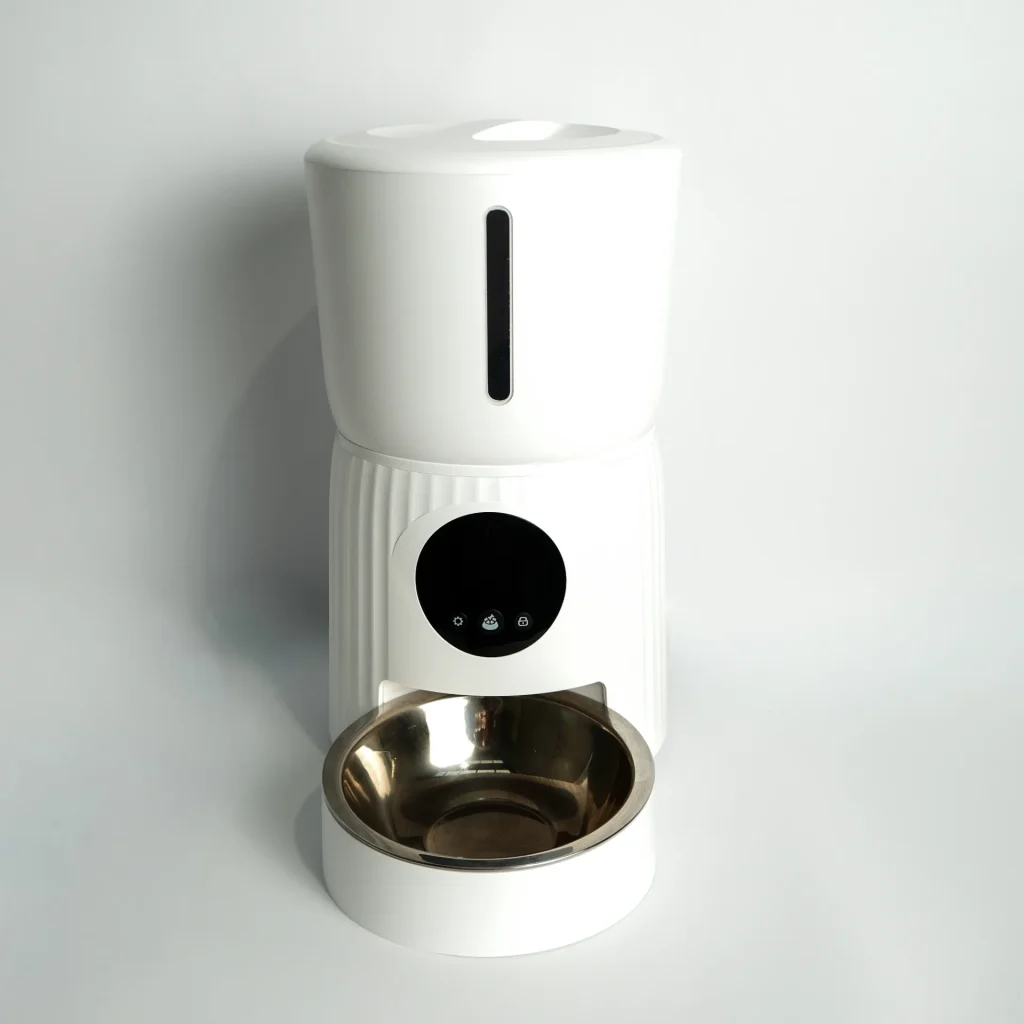
An automatic pet feeder is a container that stores pet food and releases it either continuously, on a timer, or through an app, so your dog or cat gets fed without you being physically present. At its simplest, it is a hopper, the storage compartment, sitting above a bowl, with a mechanism controlling how and when food moves between the two. That mechanism is what separates a basic gravity feeder from a fully connected smart one, and it determines how much control you actually have over your pet’s diet.
Owners usually reach for one of these devices for a similar handful of reasons: a work schedule that does not line up with mealtimes, a multi day trip needing backup feeding, or a vet recommended portion plan for a pet that is a little too enthusiastic about dinner. We will get into who benefits most further down. For now, browse our full range of automatic feeders to see what the different tiers look like in practice.
How Does an Automatic Pet Feeder Work?
Automatic pet feeders work using one of three mechanisms: gravity, a programmable timer, or a smart app connection, and each gives a different level of control over portions and scheduling. Gravity is the simplest approach, timers add real scheduling, and smart feeders layer remote monitoring on top. Two feeders that look identical on a shelf can behave very differently once your pet relies on them daily, so the mechanism matters more than the brand.
Gravity Feeders
Gravity feeders let food fall from a raised hopper into a bowl as your pet eats, topping it back up as space opens. There is no schedule, no portion setting, and no power required, which keeps this style dependable during a blackout but leaves zero control over overeating. It suits pets that graze steadily and stop once satisfied, though it is a poor match for a food motivated animal that will eat whatever sits in front of it.
Programmable Timer Feeders
Programmable feeders dispense a set portion at specific times using an internal clock rather than a phone connection. You choose the number of meals, the size of each, and when they happen, and the unit runs that schedule on its own from there. This is where portion control becomes meaningful, and it is usually the tier vets suggest for weight management.
Smart, App-Connected Feeders
Smart feeders do everything a timer model does, then add a WiFi connection so you can adjust the schedule, dispense a snack, or check feeding history from your phone, and many include a small camera for watching mealtime remotely. This tier suits people who travel or work irregular hours. Our own Automatic Pet Feeder with Camera sits in this category, and it is what we recommend most for households away from home for long stretches.
| Feeder Type | Portion Control | Scheduling | Remote Access | Best Suited For |
|---|---|---|---|---|
| Gravity | None | None | No | Grazers, cats who self-regulate |
| Programmable | Good | Yes, fixed times | No | Set routines, weight management |
| Smart with Camera | Excellent | Yes, fully flexible | Yes, via app | Travel, long work hours, multi-meal households |
Are Automatic Pet Feeders Good? Is One Worth It for Your Pet?
Automatic pet feeders are good for households where consistency matters more than physical presence, but they are not a universal upgrade and will not fix every feeding problem on their own. A feeder earns its cost when it solves a real gap: an owner who cannot always be home at the same time each day, a pet who needs portioned meals rather than free access, or a household juggling more than one feeding routine. It stops being a smart purchase when it is bought as a replacement for attention rather than a support for a routine that already mostly works.
We would rather be upfront about this than sell you something you do not need. If your current bowl setup already keeps your pet fed and healthy, a feeder is simply a convenience upgrade. If your feeding times shift constantly because your work pattern does, that unpredictability is exactly the gap this kind of device closes.
The Pros and Cons of Automatic Pet Feeders
The biggest advantage of an automatic feeder is consistency, since your pet gets fed on time whether you are stuck at work or away for the weekend. The biggest drawback is that it becomes easier to lose track of whether your pet is actually eating what gets dispensed. Both sides deserve honest weighing before you commit.
| Pros | Cons |
|---|---|
| Meals happen on schedule, even if you are running late or staying away overnight | A dead battery or power cut can delay a meal on models without backup power |
| Portioned meals support weight management and vet recommended diets | Dispensing food does not guarantee your pet is eating it, so checking the bowl still matters |
| Fewer early wake up calls from a hungry pet standing by an empty bowl | Multi pet homes can see one animal muscling in on another’s portion |
| Sealed hoppers keep kibble fresher than an open bowl exposed to air | More moving parts than a bowl means more surfaces that need regular cleaning |
| Camera equipped models let you check in on mealtime from anywhere | Higher upfront cost than a standard feeding bowl |
Who Should Get an Automatic Feeder, and Who Should Wait
An automatic feeder is the right call for households with irregular schedules, pets on portion controlled diets, or owners who travel often. It is worth holding off if you have a puppy or kitten still learning a routine, several pets sharing one feeding space, or a pet who eats too quickly for gravity alone to help.
An Automatic Feeder Tends to Work Well If
- Your work hours or roster shift around from day to day, which makes a fixed schedule genuinely useful rather than a nice extra.
- You travel a few times a year and want a reliable backup between pet sitter visits, since a feeder keeps running even if a visit is delayed.
- Your vet has recommended portion control for weight management, and you want something that measures the same amount every time instead of guesswork with a scoop.
You Might Want to Hold Off If
- You have a puppy or kitten still learning a feeding routine, since young animals often do better with a person present while those habits form.
- You keep more than one pet in the same room at mealtime, because a food motivated animal will usually find a way into a feeder that was never meant for it.
- Your pet already wolfs down meals far too fast, in which case a slow feeder bowl solves that particular problem better than automation will.
How to Choose the Right Automatic Pet Feeder for Your Pet
Choosing the right automatic feeder comes down to matching the device to your household rather than picking whichever one has the longest feature list. Start with your food type, your pet count, and how hands off you genuinely want to be.
- Confirm whether the feeder handles only dry kibble or also wet food, since most budget and mid range units are dry only, and wet food needs a sealed, rotating tray to stay fresh.
- Decide if you want a camera for reassurance or just reliable scheduling, since a camera adds cost and only earns its place if you will actually open the app.
- Look for a battery backup so a power outage does not turn into a missed meal, especially if you plan to rely on the feeder while away.
- Check how easily the bowl and hopper come apart for washing, since a feeder that is a hassle to clean gets cleaned far less often than it should.
For a straightforward option without the extra features, our Automatic Pet Feeder without Camera covers scheduling and portioning at a lower price point. If remote monitoring matters more to you, our Automatic Pet Feeder with Camera adds that layer without complicating the setup.
Can You Build Your Own Automatic Pet Feeder?
You can put together a basic DIY feeder using a timer controlled motor and a container, and plenty of tutorials online walk through the process. A homemade build usually lacks the anti jam sensors, sealed storage, and accurate portioning that a purpose built feeder includes as standard. It can be a fun weekend project or a short term fix, but we would not rely on one for a pet’s actual daily meals, especially if nobody is home to notice a jam partway through.
How to Set Up an Automatic Pet Feeder
Setting up an automatic feeder usually takes less than fifteen minutes and follows roughly the same order regardless of brand: position the unit, load the food, set your schedule, then test it before trusting your pet’s meals to it. Place the feeder on a flat, stable surface away from direct sunlight and curious paws that might tip it over, then fill the hopper with dry food while staying below the maximum fill line. Open the companion app, or use the buttons on the unit itself, and set your preferred portion size and feeding times. Finally, run one test dispense while you are home and watching, so you can confirm the portion looks right and the food lands in the bowl rather than jamming in the chute.
How to Reset an Automatic Pet Feeder
Most automatic pet feeders can be reset by cutting power for ten to fifteen seconds, then either holding a dedicated reset button or reconnecting the unit through its app, which resolves the majority of scheduling glitches or unresponsive units. Start by unplugging the feeder or removing the batteries, then pause briefly before restoring power. Many models have a small reset button near the base or back panel, and holding it for a few seconds until the indicator light blinks will usually clear a stuck schedule. Once power returns, open the app and reconnect the device, since a reset often clears the saved WiFi details along with the feeding plan. If the unit still will not respond, look for a remove device or forget device option in the app and pair it again from scratch, which resolves most of the stubborn cases we come across.
Worth remembering: a reset is usually needed after a power outage, a router change, or a firmware update, not because the feeder itself has failed.
How to Clean an Automatic Pet Feeder
Cleaning an automatic feeder properly means removing the bowl and hopper lid weekly for a wash in warm soapy water, with a lighter wipe down of the chute every few days to stop kibble dust and grease building up inside it. Dry every part fully before refilling, since trapped moisture leads to mould forming in the corners of a hopper. Check the manufacturer’s guidance before running a dishwasher cycle, as high heat can warp some plastics over time. A deeper monthly clean, where you take the whole unit apart and check the motor housing for stray kibble, keeps the mechanism running smoothly and catches a jam risk before it becomes an actual jam.
How Much Does an Automatic Pet Feeder Cost in Australia?
Automatic pet feeders in Australia typically range from under $30 for a basic gravity model to around $130 for a smart feeder with a built in camera, with mid range programmable options usually landing between $80 and $100. Entry level gravity feeders sit at the lower end simply because there are no electronics to pay for. Our own Automatic Pet Feeder without Camera is priced at $89.95, typical for a programmable model with app free scheduling, while our Automatic Pet Feeder with Camera sits at $124.95, in line with the smart tier above it.
Is an Automatic Pet Feeder Worth Adding to Your Routine?
The right automatic feeder earns its place when it closes a genuine gap in your routine rather than replacing your attention altogether. Weigh your own schedule and your pet’s habits against the pros and cons above before deciding either way. A single pet on a portioned diet, an owner with a shifting roster, or a household that travels a few times a year will likely get real value from one. A multi pet home with food guarding tendencies, or a young pet still learning routine, may be better served by waiting, or by trying a slow feeder bowl in the meantime.
If you have decided a feeder fits your household, take a look through our full range of automatic feeders to compare the without camera and with camera options side by side.